The Art and Architecture of the Kakatiya Dynasty (12th–14th century) represents a unique transition in South Indian history. It evolved from the Later Chalukyan style into a distinct, robust, and highly ornamental "Kakatiya Style," primarily characterized by the use of Black Basalt stone and Star-shaped temple plans.
1. Key Architectural Features
Before looking at specific monuments, it is important to understand the "signature" elements that make a building "Kakatiyan":
Trikutalayam (Triple Shrine): Most major Kakatiya temples feature three shrines (dedicated to Shiva, Vishnu, and Surya) connected by a common central hall (Ranga Mandapa).
Upapitha (Star-shaped Base): The temples are built on high, star-shaped raised platforms. This not only provided elevation but allowed devotees to perform Pradakshina (circumambulation) while admiring the exterior carvings.
Black Basalt Carvings: They used locally available black basalt, which is extremely hard. Despite the hardness, Kakatiya craftsmen achieved a "mirror-like" finish and intricate, lace-like detail.
Floating Bricks: In a remarkable feat of medieval engineering, they used lightweight bricks (which could float in water) for temple roofs to reduce the weight on the stone pillars.
Sand-Box Technology: To make temples earthquake-resistant, the foundations were filled with a mixture of sand, lime, and jaggery, which acted as a cushion during seismic tremors.
2. Iconic Monuments
A. The Thousand Pillar Temple (Rudreshwara Temple)
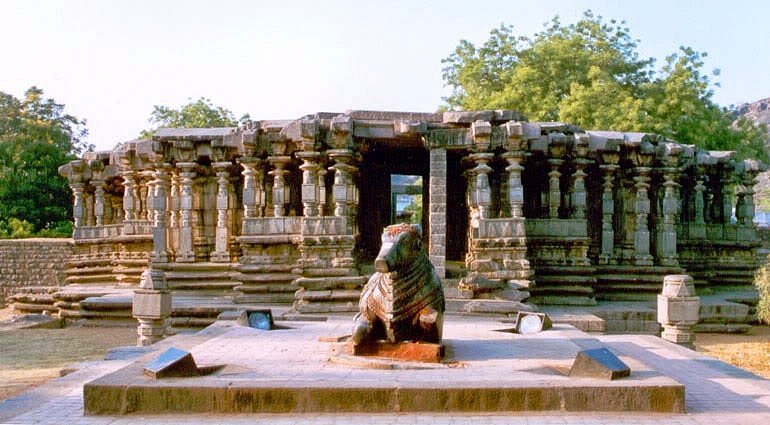
Location: Hanamkonda (Built in 1163 CE by Rudradeva I).
Significance: It is the earliest masterpiece of the dynasty.
Features: It features a massive, monolithic Nandi carved out of a single black basalt stone. The pillars are so finely polished that they reflect light like a mirror.
B. Ramappa Temple (Rudreshwara Temple)
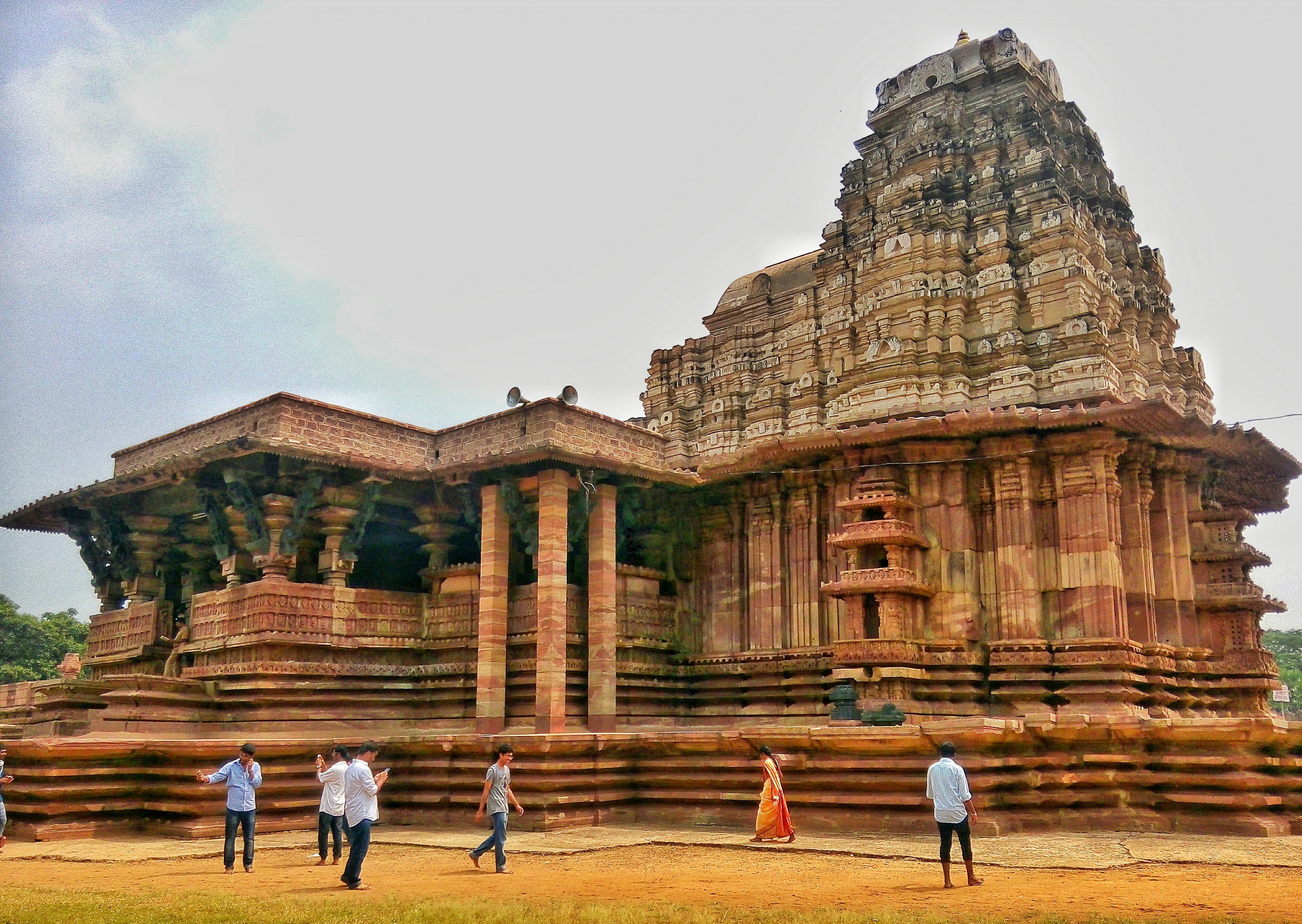
Location: Palampet (Built in 1213 CE by General Recherla Rudra during Ganapati Deva’s reign).
UNESCO Status: It is a UNESCO World Heritage Site.
Features:
Famous for its Madanikas (bracket figures) made of black basalt, depicting dancers and musicians in graceful poses.
The roof is constructed with the famous floating bricks.
The temple is named after its chief architect, Ramappa, which is a rare instance in Indian history where a temple is named after the sculptor rather than the deity.
C. Warangal Fort and Kala Thoranams
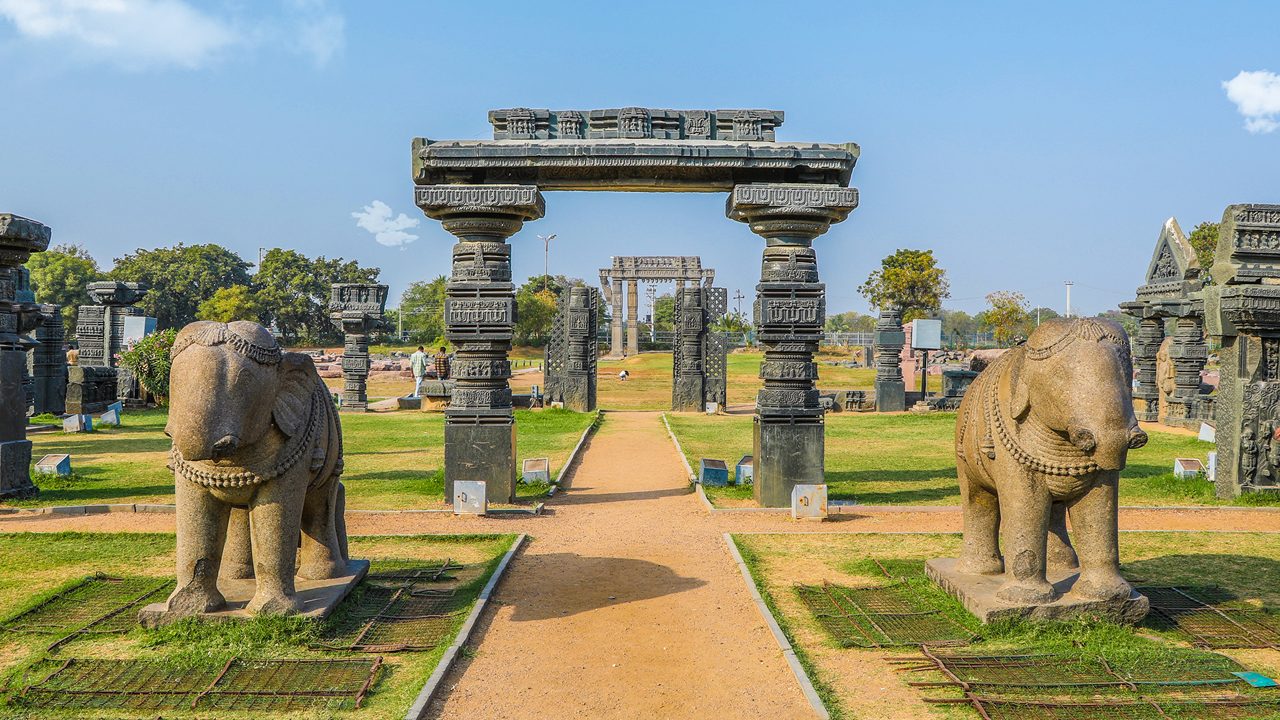
The Fort: A unique three-layered defense system consisting of an earthen wall, a moat, and a massive inner stone wall.
Kala Thoranams (Gateways): These are four free-standing stone arches that once led to a central Shiva temple. They feature motifs of swans, lotuses, and mythical animals.
Symbolism: The Kala Thoranam is so iconic that it has been adopted as the official emblem of the State of Telangana.
3. Sculpture and Decorative Art
The Kakatiya art was not limited to buildings; it was a celebration of movement and life.
Perini Shivatandavam: The sculptures at Ramappa temple provide the visual basis for this ancient warrior dance form. Every pose of the dance is meticulously carved into the stone pillars.
Jewelry and Attire: The carvings give us deep insights into the fashion of the 13th century—from intricate waist belts (Vaddanam) to elaborate hairstyles.
Lathe-turned Pillars: Many pillars appear as if they were turned on a giant lathe, showcasing a high degree of technical precision.
4. Summary Table for Revision
| Feature | Details |
|---|---|
| Primary Material | Black Basalt (for carvings) and Sandstone (for structures). |
| Foundation Tech | Sand-Box Technology (for earthquake resistance). |
| Roof Tech | Floating Bricks (spongy, lightweight clay). |
| Most Famous Arch | Kala Thoranam (Warangal Gate). |
| Key Deity | Primarily Lord Shiva (Swayambhu or Rudreshwara). |
काकतीय राजवंश की कला और वास्तुकला (12वीं-14वीं शताब्दी) दक्षिण भारतीय इतिहास में एक अद्वितीय परिवर्तन का प्रतिनिधित्व करती है। यह उत्तरवर्ती चालुक्य शैली से विकसित होकर एक विशिष्ट, मजबूत और अत्यधिक अलंकृत "काकतीय शैली" में बदल गई, जिसकी मुख्य विशेषता काले बेसाल्ट (Black Basalt) पत्थर का उपयोग और सितारे के आकार के (Star-shaped) मंदिर की योजनाएँ हैं।
1. मुख्य वास्तुकला विशेषताएं
विशिष्ट स्मारकों को देखने से पहले, उन "सिग्नेचर" तत्वों को समझना महत्वपूर्ण है जो किसी इमारत को "काकतीय" बनाते हैं:
त्रिकुटलयम (तिहरा मंदिर): अधिकांश प्रमुख काकतीय मंदिरों में तीन मंदिर (शिव, विष्णु और सूर्य को समर्पित) होते हैं जो एक सामान्य केंद्रीय हॉल (रंग मंडप) से जुड़े होते हैं।
उपपीठ (सितारे के आकार का आधार): मंदिर ऊंचे, सितारे के आकार के चबूतरे पर बनाए गए हैं। यह न केवल ऊंचाई प्रदान करता था, बल्कि भक्तों को बाहरी नक्काशी को देखते हुए प्रदक्षिणा करने की अनुमति भी देता था।
काले बेसाल्ट की नक्काशी: उन्होंने स्थानीय स्तर पर उपलब्ध काले बेसाल्ट का उपयोग किया, जो अत्यंत कठोर होता है। कठोरता के बावजूद, काकतीय शिल्पकारों ने "दर्पण जैसी" फिनिश और जटिल नक्काशी हासिल की।
तैरने वाली ईंटें (Floating Bricks): मध्यकालीन इंजीनियरिंग के एक अद्भुत कारनामे में, उन्होंने मंदिर की छतों के लिए हल्के वजन वाली ईंटों (जो पानी में तैर सकती थीं) का उपयोग किया ताकि पत्थर के खंभों पर भार कम किया जा सके।
सैंड-बॉक्स तकनीक (Sand-Box Technology): मंदिरों को भूकंप-रोधी बनाने के लिए, नींव को रेत, चूना और गुड़ के मिश्रण से भरा गया था, जो भूकंपीय झटकों के दौरान एक कुशन (Cushion) के रूप में कार्य करता था।
2. प्रतिष्ठित स्मारक
A. हजार स्तंभ मंदिर (रुद्रेश्वर मंदिर)
स्थान: हनुमकोंडा (1163 ईस्वी में रुद्रदेव प्रथम द्वारा निर्मित)।
महत्व: यह इस राजवंश की सबसे प्रारंभिक उत्कृष्ट कृति है।
विशेषताएं: इसमें एक विशाल, अखंड नंदी है जिसे एक ही काले बेसाल्ट पत्थर से तराशा गया है। इसके खंभों पर इतनी बारीक पॉलिश है कि वे दर्पण की तरह प्रकाश परावर्तित करते हैं।
B. रामप्पा मंदिर (रुद्रेश्वर मंदिर)
स्थान: पालमपेट (गणपति देव के शासनकाल के दौरान सेनापति रेचेरला रुद्र द्वारा 1213 ईस्वी में निर्मित)।
UNESCO दर्जा: यह एक UNESCO विश्व धरोहर स्थल है।
विशेषताएं:
यह काले बेसाल्ट से बनी अपनी मदनिकाओं (ब्रैकेट आकृतियों) के लिए प्रसिद्ध है, जिसमें नर्तकियों और संगीतकारों को सुंदर मुद्राओं में दर्शाया गया है।
छत का निर्माण प्रसिद्ध तैरने वाली ईंटों से किया गया है।
इस मंदिर का नाम इसके मुख्य वास्तुकार, रामप्पा के नाम पर रखा गया है, जो भारतीय इतिहास में एक दुर्लभ उदाहरण है जहाँ मंदिर का नाम देवता के बजाय मूर्तिकार के नाम पर रखा गया है।
C. वारंगल का किला और कला तोरणम
किला: एक अद्वितीय त्रि-स्तरीय रक्षा प्रणाली जिसमें मिट्टी की दीवार, एक खाई और एक विशाल आंतरिक पत्थर की दीवार शामिल है।
कला तोरणम (प्रवेश द्वार): ये पत्थर के चार स्वतंत्र मेहराब हैं जो कभी एक केंद्रीय शिव मंदिर की ओर ले जाते थे। इनमें हंसों, कमलों और पौराणिक जानवरों के चित्र बने हैं।
प्रतीकवाद: कला तोरणम इतना प्रतिष्ठित है कि इसे तेलंगाना राज्य के आधिकारिक प्रतीक के रूप में अपनाया गया है।
3. मूर्तिकला और सजावटी कला
काकतीय कला केवल इमारतों तक सीमित नहीं थी; यह गति और जीवन का उत्सव थी।
पेरिनी शिवतांडवम: रामप्पा मंदिर की मूर्तियाँ इस प्राचीन योद्धा नृत्य रूप का दृश्य आधार प्रदान करती हैं। नृत्य की हर मुद्रा को पत्थर के खंभों पर सावधानीपूर्वक उकेरा गया है।
आभूषण और पहनावा: नक्काशी हमें 13वीं शताब्दी के फैशन की गहरी अंतर्दृष्टि देती है—जटिल कमरबंद (वड्डनम) से लेकर विस्तृत हेयर स्टाइल तक।
लेथ-टर्न्ड पिलर्स (Lathe-turned Pillars): कई खंभे ऐसे दिखते हैं जैसे उन्हें किसी विशाल खराद (Lathe) पर घुमाया गया हो, जो उच्च स्तर की तकनीकी सटीकता को प्रदर्शित करता है।
4. त्वरित पुनरीक्षण तालिका (Revision Table)
| विशेषता | विवरण |
|---|---|
| प्राथमिक सामग्री | नक्काशी के लिए काला बेसाल्ट और संरचनाओं के लिए बलुआ पत्थर। |
| नींव तकनीक | सैंड-बॉक्स तकनीक (भूकंप प्रतिरोध के लिए)। |
| छत तकनीक | तैरने वाली ईंटें (स्पंजी, हल्के वजन वाली मिट्टी)। |
| सबसे प्रसिद्ध मेहराब | कला तोरणम (वारंगल गेट)। |
| मुख्य देवता | मुख्य रूप से भगवान शिव (स्वयंभू या रुद्रेश्वर)। |