The Karkota Dynasty (c. 625 – 855 CE)
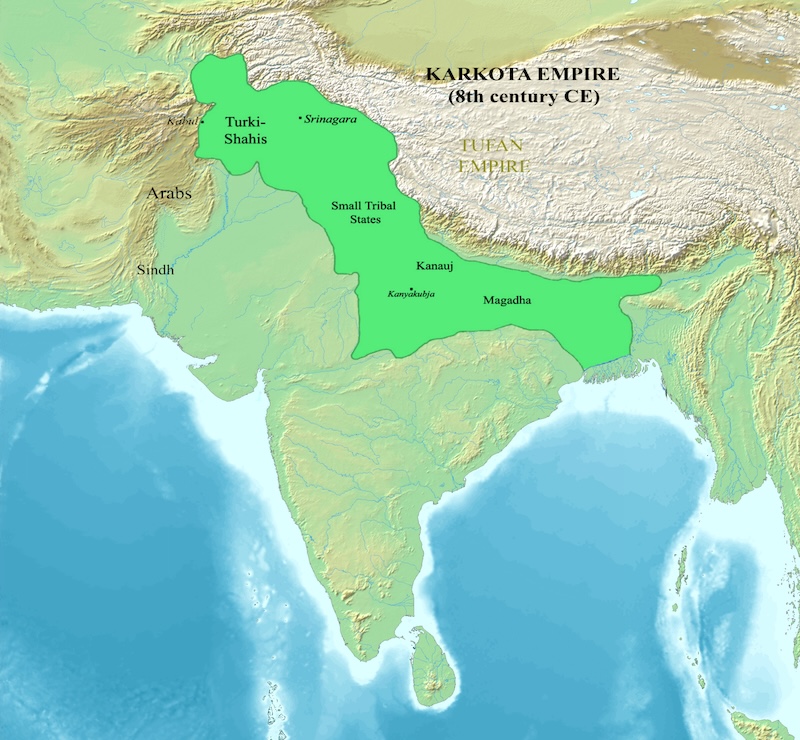
The Karkota Dynasty marked the "Imperial Age" of Kashmir, transforming a secluded valley into a formidable Pan-Asian power. It is most celebrated for its architectural grandeur and military expansionism.
1. Origin and Background
Founder: Durlabhavardhana established the dynasty in 625 CE.
Lineage: Claims descent from the mythical serpent deity Karkotaka.
Source: Kalhana’s Rajatarangini is the primary historical source.
Geographical Context: Shifted the political gravity of North India toward the Kashmir Valley.
Foreign Accounts: The Chinese traveler Xuanzang visited Kashmir during the reign of Durlabhavardhana and recorded the kingdom's prosperity.
2. Important Rulers
| Ruler’s Name | Period (Approx.) | Key Contributions / Events |
|---|---|---|
| Durlabhavardhana | 625–661 CE | Founder; hosted Xuanzang; consolidated the valley. |
| Durlabhaka | 661–711 CE | Also known as Pratapaditya II; built the town of Pratapapura. |
| Chandrapida | 711–719 CE | Known for justice; sought Chinese help against Arab advances. |
| Tarapida | 719–723 CE | Regarded as a cruel and oppressive tyrant. |
| Lalitaditya Muktapida | 724–760 CE | Zenith of the dynasty; Great conqueror and builder. |
| Jayapida Vinayaditya | 779–813 CE | Patron of learning; attempted to revive the empire's glory. |
3. Lalitaditya Muktapida: The Alexander of Kashmir
Lalitaditya is the most illustrious ruler of the dynasty, known for his "Digvijaya" (conquest of all directions).
Military Expansion:
Defeated Yashovarman of Kannauj, making Kashmir the master of the Indo-Gangetic plains.
Successfully checked the eastern advance of the Arabs (under Junaid).
Launched expeditions into Central Asia, defeating the Tibetans and Turks.
Diplomacy: Maintained strong diplomatic ties with the Tang Dynasty of China to counter the Tibetan-Arab alliance.
Secular Patronage: Though a follower of Vishnu, he patronized Buddhism and built numerous Viharas and Stupas.
4. Administration and Governance
Centralization: Established a high degree of bureaucratic control.
Pancha-Mahasabda: Introduced five high offices (Great Five Titles) to oversee the administration.
Kayasthas: Emerged as a specialized class of officials/scribes for maintaining state records and tax collection.
Justice: Chronicled by Kalhana as being strictly impartial, with the King as the final court of appeal.
5. Economy
Trade: Benefited immensely from the Silk Route trade, acting as a transit hub between India, China, and Central Asia.
Agriculture: Invested in irrigation; cleared forests to bring more land under cultivation.
Revenue: Wealth flowed in through war booties from conquests and high taxes on the flourishing merchant class.
6. Art and Architecture
The Karkota period represents the peak of Kashmiri classical art.
Martand Sun Temple: * Built by Lalitaditya near Anantnag.
Architecture: Unique synthesis of Gandharan, Gupta, and Greek (Hellenistic) styles.
Features: Massive stone blocks, trefoil arches, fluted columns, and a high-raised plinth.
Town Planning: Founded the city of Parihaspura (City of Pleasures) as his new capital, filling it with gold and silver images of deities.
Sculpture: Development of the "Kashmiri Style" characterized by almond-shaped eyes and intricate jewelry carvings.
7. Causes of Decline
Weak Successors: After Jayapida, the rulers were incompetent and lacked military vision.
Internal Factionalism: Rivalries between different court factions and the rise of the Damaras (landed aristocracy).
Economic Strain: Constant wars and massive architectural projects depleted the state treasury.
The Rise of Utpala Dynasty: The last Karkota ruler, Utpalapida, was deposed by his minister Avantivarman, marking the transition to the Utpala Dynasty in 855 CE.
UPSC Value Addition (Prelims Boost)
Martand Temple: Often compared to the Parthenon of Greece due to its fluted columns.
Xuanzang's Note: Recorded that the King of Kashmir controlled the passage to the "Western Regions."
Parihaspura: Served as a major center for both Brahminical and Buddhist learning.
कार्कोट राजवंश (लगभग 625 – 855 ईस्वी)
कार्कोट राजवंश कश्मीर के "शाही युग" का प्रतीक है, जिसने एक अलग-थलग घाटी को एक शक्तिशाली अखिल एशियाई शक्ति (Pan-Asian power) में बदल दिया। यह अपनी स्थापत्य भव्यता और सैन्य विस्तारवाद के लिए सबसे अधिक प्रसिद्ध है।
1. उत्पत्ति और पृष्ठभूमि
संस्थापक: दुर्लभवर्धन ने 625 ईस्वी में इस वंश की स्थापना की।
वंश: पौराणिक नाग देवता कार्कोट से अपनी उत्पत्ति का दावा करते हैं।
स्रोत: कल्हण की 'राजतरंगिणी' इस वंश का प्राथमिक ऐतिहासिक स्रोत है।
भौगोलिक संदर्भ: इस वंश ने उत्तर भारत के राजनीतिक केंद्र को कश्मीर घाटी की ओर स्थानांतरित कर दिया।
विदेशी विवरण: चीनी यात्री ह्वेनसांग (Xuanzang) ने दुर्लभवर्धन के शासनकाल के दौरान कश्मीर का दौरा किया और राज्य की समृद्धि का विवरण दिया।
2. महत्वपूर्ण शासक
| शासक का नाम | शासन काल (लगभग) | मुख्य कार्य / घटनाएँ |
|---|---|---|
| दुर्लभवर्धन | 625–661 ईस्वी | संस्थापक; ह्वेनसांग की मेजबानी की; घाटी को सुदृढ़ किया। |
| दुर्लभक | 661–711 ईस्वी | प्रतापादित्य द्वितीय के नाम से भी प्रसिद्ध; प्रतापपुर शहर बसाया। |
| चंद्रापीड़ | 711–719 ईस्वी | अपने न्याय के लिए प्रसिद्ध; अरब आक्रमण के विरुद्ध चीन से सहायता मांगी। |
| तारापीड़ | 719–723 ईस्वी | एक क्रूर और दमनकारी शासक माना जाता था। |
| ललितादित्य मुक्तापीड़ | 724–760 ईस्वी | वंश का चरमोत्कर्ष; महान विजेता और निर्माता। |
| जयापीड़ विनयादित्य | 779–813 ईस्वी | विद्या का संरक्षक; साम्राज्य के गौरव को पुनर्जीवित करने का प्रयास किया। |
3. ललितादित्य मुक्तापीड़: कश्मीर का सिकंदर
ललितादित्य इस वंश के सबसे यशस्वी शासक हैं, जो अपनी "दिग्विजय" (सभी दिशाओं में विजय) के लिए जाने जाते हैं।
सैन्य विस्तार:
कन्नौज के यशोवर्मन को हराया, जिससे कश्मीर भारत-गंगा के मैदानों का स्वामी बन गया।
अरबों (जुनैद के नेतृत्व में) के पूर्वी विस्तार को सफलतापूर्वक रोका।
मध्य एशिया में अभियान चलाए, तिब्बतियों और तुर्कों को पराजित किया।
कूटनीति: तिब्बती-अरब गठबंधन का मुकाबला करने के लिए चीन के तांग राजवंश के साथ मजबूत कूटनीतिक संबंध बनाए रखे।
धार्मिक संरक्षण: हालांकि वे विष्णु के भक्त थे, लेकिन उन्होंने बौद्ध धर्म को भी संरक्षण दिया और कई विहारों तथा स्तूपों का निर्माण करवाया।
4. प्रशासन और शासन
केंद्रीकरण: नौकरशाही नियंत्रण का एक उच्च स्तर स्थापित किया।
पंच-महासब्द: प्रशासन की देखरेख के लिए पांच उच्च पदों (ग्रेट फाइव टाइटल्स) की शुरुआत की।
कायस्थ: राज्य के रिकॉर्ड बनाए रखने और कर संग्रह के लिए अधिकारियों/लेखकों के एक विशेष वर्ग के रूप में उभरे।
न्याय: कल्हण के अनुसार न्याय व्यवस्था अत्यंत निष्पक्ष थी, जिसमें राजा अपील की अंतिम अदालत होता था।
5. अर्थव्यवस्था
व्यापार: रेशम मार्ग (Silk Route) व्यापार से अत्यधिक लाभ हुआ, कश्मीर भारत, चीन और मध्य एशिया के बीच एक पारगमन केंद्र (transit hub) के रूप में कार्य करता था।
कृषि: सिंचाई में निवेश किया; अधिक भूमि को खेती के अंतर्गत लाने के लिए जंगलों को साफ करवाया।
राजस्व: विजित राज्यों से प्राप्त युद्ध सामग्री और समृद्ध व्यापारी वर्ग पर लगाए गए उच्च करों से राज्य में धन का प्रवाह हुआ।
6. कला और वास्तुकला
कार्कोट काल कश्मीरी शास्त्रीय कला के शिखर का प्रतिनिधित्व करता है।
मार्तंड सूर्य मंदिर: * ललितादित्य द्वारा अनंतनाग के पास निर्मित।
वास्तुकला: गांधार, गुप्त और ग्रीक (हेलेनिस्टिक) शैलियों का एक अनूठा संश्लेषण।
विशेषताएं: विशाल पत्थर के ब्लॉक, ट्रेफोइल मेहराब (trefoil arches), नालीदार स्तंभ (fluted columns) और एक ऊँचा चबूतरा।
नगर नियोजन: अपनी नई राजधानी के रूप में परिहासपुर (खुशियों का शहर) की स्थापना की, जिसे देवताओं की सोने और चांदी की मूर्तियों से सजाया गया था।
मूर्तिकला: "कश्मीरी शैली" का विकास हुआ, जिसकी विशेषता बादाम के आकार की आंखें और जटिल गहनों की नक्काशी थी।
7. पतन के कारण
कमजोर उत्तराधिकारी: जयापीड़ के बाद के शासक अक्षम थे और उनमें सैन्य दूरदर्शिता की कमी थी।
आंतरिक गुटबाजी: दरबार के विभिन्न गुटों के बीच प्रतिद्वंद्विता और डामरों (भूमिल अभिजात वर्ग) का उदय।
आर्थिक तनाव: निरंतर युद्धों और विशाल स्थापत्य परियोजनाओं ने राजकीय खजाने को खाली कर दिया।
उत्पल राजवंश का उदय: अंतिम कार्कोट शासक, उत्पलपीड़ को उसके मंत्री अवंतीवर्मन ने पदच्युत कर दिया, जिससे 855 ईस्वी में उत्पल राजवंश का संक्रमण हुआ।
UPSC वैल्यू एडिशन (प्रीलिम्स बूस्ट)
मार्तंड मंदिर: इसके नालीदार स्तंभों के कारण इसकी तुलना अक्सर ग्रीस के 'पार्थेनन' से की जाती है।
ह्वेनसांग का नोट: उन्होंने दर्ज किया कि कश्मीर का राजा "पश्चिमी क्षेत्रों" के मार्ग को नियंत्रित करता था।
परिहासपुर: यह ब्राह्मणवादी और बौद्ध दोनों शिक्षाओं के एक प्रमुख केंद्र के रूप में कार्य करता था।