Solar System: Meaning and Components
The Solar System is our local neighbourhood in space. It consists of the Sun and all the celestial bodies connected with it mainly through the Sun’s gravity.
It includes eight planets, dwarf planets, natural satellites, asteroids, comets, meteoroids, dust, gas and many other smaller objects.
Scope of This Post
This post provides only the basic map of the Solar System: its meaning, central body, major components, planetary order, scale and broad arrangement. Each component will be studied in detail in later posts.
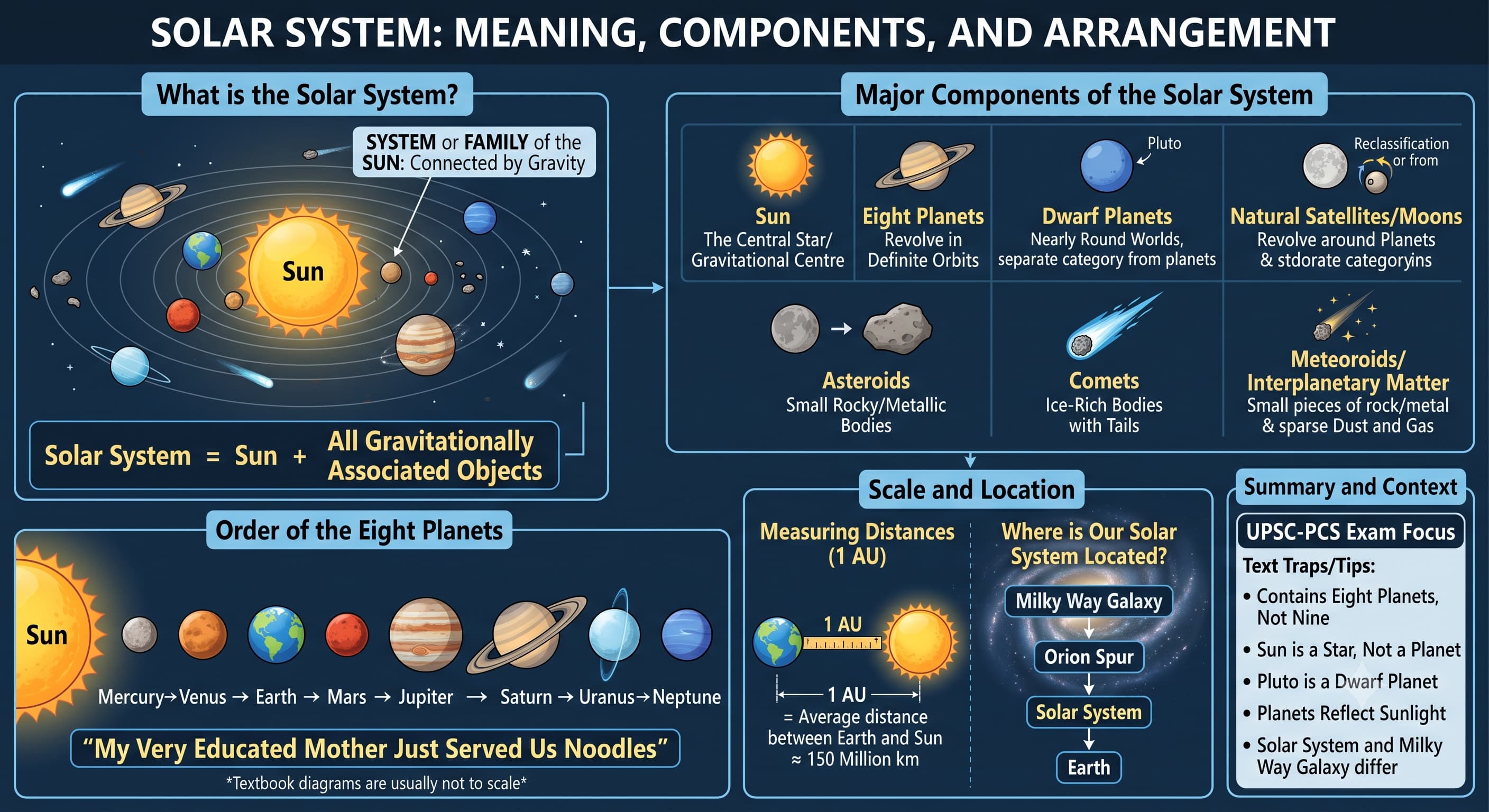
1. What Does “Solar System” Mean?
The word solar is related to the Sun. Therefore, Solar System means the system or family of the Sun.
The Sun is the central and most massive body of this system. Its gravity keeps planets and numerous smaller objects moving around it in definite paths called orbits.
Easy Example: Think of the Solar System as a large family. The Sun is its central member, while planets, moons and smaller bodies are other members moving under its gravitational influence.
2. Why Is It Called a “System”?
The objects of the Solar System do not move randomly. They are connected through gravity and follow regular motions.
Gravitational Connection
The Sun’s gravity binds the major members of the Solar System together.
Regular Orbits
Planets and other bodies follow curved paths rather than travelling randomly through space.
Continuous Motion
Planets rotate on their axes and revolve around the Sun.
3. The Sun: Central Member of the Solar System
The Sun is a star. It is the largest and most massive object in the Solar System.
The Sun performs three basic roles in our planetary system:
Gravitational Centre
Its gravity controls the motion of planets and many smaller bodies.
Source of Light
Planets and moons do not produce their own visible light; they mainly reflect sunlight.
Source of Energy
Solar energy supports Earth’s climate, water cycle and life.
Important: The internal structure, composition and energy-producing process of the Sun will be studied separately. This post gives only its role in the Solar System.
4. Major Components of the Solar System
The Solar System contains different kinds of celestial bodies. At this stage, we only need to identify them.
The Sun
The only star and the central gravitational body of our Solar System.
Eight Planets
Major spherical bodies that revolve around the Sun in definite orbits.
Dwarf Planets
Smaller, nearly round worlds that orbit the Sun but are classified separately from planets.
Natural Satellites
Bodies commonly called moons that revolve around planets or some other celestial bodies.
Asteroids
Comparatively small rocky or metallic bodies revolving around the Sun.
Comets
Ice-rich bodies that may develop a bright head and tail when they approach the Sun.
Meteoroids
Small pieces of rock or metal moving through interplanetary space.
Dust and Gas
Very thinly distributed matter is also present in the space between larger bodies.
Remember: The Solar System is much more than the Sun and eight planets. It also includes numerous smaller worlds and particles.
5. Order of the Eight Planets
In increasing order of average distance from the Sun, the eight planets are:
Mercury
Venus
Earth
Mars
Jupiter
Saturn
Uranus
Neptune
Memory Trick:
My Very Educated Mother Just Served Us Noodles
Mercury, Venus, Earth, Mars, Jupiter, Saturn, Uranus, Neptune
UPSC Trap: Pluto is not included in the list of eight planets. It is classified as a dwarf planet.
6. Astronomical Unit: Measuring Distances in the Solar System
Distances in the Solar System are extremely large. Therefore, repeatedly writing them in kilometres becomes inconvenient.
Scientists use a convenient unit called the Astronomical Unit, abbreviated as AU.
Easy Meaning: If the average Earth–Sun distance is treated as one standard measuring stick, that measuring stick is called 1 AU.
AU is mainly useful for comparing distances within the Solar System. Much larger cosmic distances are generally expressed in light-years or parsecs.
7. Broad Arrangement of the Solar System
The Solar System has a broad pattern. The Sun lies at its centre, planets occupy different orbital zones, and numerous smaller icy and rocky bodies are distributed between and beyond planetary orbits.
Central Region
The Sun occupies the central position and dominates the system through its gravity.
Planetary Region
The eight planets revolve around the Sun at different average distances.
Outer Small-Body Regions
Many icy and rocky bodies are found beyond or between the major planetary orbits.
Important: The planets are not actually arranged in a straight line. They move continuously around the Sun in separate orbits.
Diagram Warning: Most textbook diagrams are not drawn to scale. Planet sizes are enlarged and the enormous distances between them are greatly reduced.
8. Where Is Our Solar System Located?
Our Solar System is a very small part of the Milky Way Galaxy. Within the Milky Way, it is located in a minor spiral structure commonly called the Orion Spur.
Universe
Milky Way
Orion Spur
Solar System
Earth
Common Mistake: The Solar System is not a galaxy. It is one planetary system located inside the Milky Way Galaxy.
9. Is Our Solar System the Only Planetary System?
No. Many other stars also have planets revolving around them. A star and the objects orbiting it form a planetary system.
Planets located outside our Solar System are called exoplanets.
10. What Will Be Studied in the Next Posts?
To avoid repetition, this introductory post does not explain every component in detail. The following themes will be covered separately:
Formation
Nebular Hypothesis and formation of the Solar System.
Planet Classification
Inner, outer, terrestrial, gas-giant and ice-giant planets.
The Sun
Structure, fusion, solar activity and space weather.
Individual Planets
Comparative study of the eight planets.
Dwarf Planets
Pluto’s reclassification and major dwarf planets.
Small Bodies
Asteroids, comets, meteoroids and their source regions.
11. UPSC–UPPSC Exam Traps
The Solar System contains eight planets, not nine.
The Sun is a star, not a planet.
Pluto is classified as a dwarf planet.
A planet shines mainly by reflecting sunlight; it is not self-luminous like a star.
The Solar System and the Milky Way Galaxy are not the same.
The planets are not permanently arranged in a straight line.
Most diagrams of the Solar System are not drawn to scale.
An Astronomical Unit is a unit of distance, not time.
Quick Revision
The Solar System is the Sun and all bodies connected with it mainly through gravity.
The Sun is the only star and the central gravitational body of the Solar System.
The main components are planets, dwarf planets, natural satellites, asteroids, comets, meteoroids, dust and gas.
The eight planets are Mercury, Venus, Earth, Mars, Jupiter, Saturn, Uranus and Neptune.
Pluto is a dwarf planet.
One AU is approximately the average distance between Earth and the Sun.
Our Solar System lies in the Milky Way Galaxy.
Solar System diagrams usually do not represent actual sizes and distances.
One-Line Memory
The Solar System is the Sun’s gravitational family, consisting of eight planets and numerous smaller celestial bodies.
Think Like UPSC
Whenever you study a Solar System body, ask four basic questions:
These questions will help you connect every later post with the basic structure explained here.
सौरमंडल: अर्थ एवं घटक
सौरमंडल अंतरिक्ष में हमारा स्थानीय पड़ोस है। इसमें सूर्य तथा वे सभी खगोलीय पिंड शामिल हैं, जो मुख्यतः सूर्य के गुरुत्वाकर्षण द्वारा उससे जुड़े हुए हैं।
इसमें आठ ग्रह, बौने ग्रह, प्राकृतिक उपग्रह, क्षुद्रग्रह, धूमकेतु, उल्काभ, धूल, गैस तथा अनेक अन्य छोटे पिंड शामिल हैं।
इस पोस्ट का दायरा
यह पोस्ट केवल सौरमंडल का मूलभूत खाका प्रस्तुत करती है—जिसमें उसका अर्थ, केंद्रीय पिंड, प्रमुख घटक, ग्रहों का क्रम, पैमाना तथा व्यापक व्यवस्था शामिल है। प्रत्येक घटक का विस्तृत अध्ययन आगे की पोस्टों में किया जाएगा।
1. “सौरमंडल” का क्या अर्थ है?
शब्द सौर का संबंध सूर्य से है। इसलिए सौरमंडल का अर्थ है सूर्य का तंत्र या परिवार।
सूर्य इस तंत्र का केंद्रीय और सर्वाधिक द्रव्यमान वाला पिंड है। उसका गुरुत्वाकर्षण ग्रहों तथा अनेक छोटे पिंडों को निश्चित पथों पर उसके चारों ओर गतिशील रखता है। इन पथों को कक्षाएँ कहते हैं।
सरल उदाहरण: सौरमंडल को एक बड़े परिवार की तरह समझिए। सूर्य इसका केंद्रीय सदस्य है, जबकि ग्रह, चंद्रमा और छोटे पिंड इसके अन्य सदस्य हैं, जो सूर्य के गुरुत्वीय प्रभाव में गति करते हैं।
2. इसे “तंत्र” क्यों कहा जाता है?
सौरमंडल के पिंड अनियमित रूप से नहीं चलते। वे गुरुत्वाकर्षण से जुड़े हैं और नियमित गति का पालन करते हैं।
गुरुत्वीय संबंध
सूर्य का गुरुत्वाकर्षण सौरमंडल के प्रमुख सदस्यों को एक साथ बाँधे रखता है।
नियमित कक्षाएँ
ग्रह और अन्य पिंड अंतरिक्ष में अनियमित रूप से भटकने के बजाय वक्र पथों का अनुसरण करते हैं।
निरंतर गति
ग्रह अपने अक्ष पर घूर्णन करते हैं और सूर्य के चारों ओर परिक्रमण करते हैं।
3. सूर्य: सौरमंडल का केंद्रीय सदस्य
सूर्य एक तारा है। यह सौरमंडल का सबसे बड़ा और सर्वाधिक द्रव्यमान वाला पिंड है।
हमारे ग्रहीय तंत्र में सूर्य तीन मूलभूत भूमिकाएँ निभाता है:
गुरुत्वीय केंद्र
उसका गुरुत्वाकर्षण ग्रहों और अनेक छोटे पिंडों की गति को नियंत्रित करता है।
प्रकाश का स्रोत
ग्रह और चंद्रमा अपना दृश्य प्रकाश उत्पन्न नहीं करते; वे मुख्यतः सूर्य के प्रकाश को परावर्तित करते हैं।
ऊर्जा का स्रोत
सौर ऊर्जा पृथ्वी की जलवायु, जल चक्र और जीवन को बनाए रखने में सहायक है।
महत्त्वपूर्ण: सूर्य की आंतरिक संरचना, संघटन और ऊर्जा-उत्पादन की प्रक्रिया का अध्ययन अलग से किया जाएगा। इस पोस्ट में केवल सौरमंडल में उसकी भूमिका बताई गई है।
4. सौरमंडल के प्रमुख घटक
सौरमंडल में विभिन्न प्रकार के खगोलीय पिंड पाए जाते हैं। इस चरण पर हमें केवल उनकी पहचान करनी है।
सूर्य
हमारे सौरमंडल का एकमात्र तारा तथा केंद्रीय गुरुत्वीय पिंड।
आठ ग्रह
प्रमुख गोलाकार पिंड, जो निश्चित कक्षाओं में सूर्य की परिक्रमा करते हैं।
बौने ग्रह
छोटे और लगभग गोलाकार पिंड, जो सूर्य की परिक्रमा करते हैं, लेकिन ग्रहों से अलग श्रेणी में रखे जाते हैं।
प्राकृतिक उपग्रह
वे पिंड जिन्हें सामान्यतः चंद्रमा कहा जाता है और जो ग्रहों या कुछ अन्य खगोलीय पिंडों की परिक्रमा करते हैं।
क्षुद्रग्रह
तुलनात्मक रूप से छोटे चट्टानी या धात्विक पिंड, जो सूर्य की परिक्रमा करते हैं।
धूमकेतु
बर्फ-समृद्ध पिंड, जो सूर्य के निकट आने पर चमकीला सिर और पूँछ विकसित कर सकते हैं।
उल्काभ
चट्टान या धातु के छोटे टुकड़े, जो अंतरग्रहीय अंतरिक्ष में गतिशील रहते हैं।
धूल और गैस
बड़े पिंडों के बीच के अंतरिक्ष में अत्यंत विरल रूप से वितरित पदार्थ भी उपस्थित होता है।
याद रखें: सौरमंडल केवल सूर्य और आठ ग्रहों तक सीमित नहीं है। इसमें अनेक छोटे खगोलीय पिंड और कण भी शामिल हैं।
5. आठ ग्रहों का क्रम
सूर्य से औसत दूरी के बढ़ते क्रम में आठ ग्रह हैं:
बुध
शुक्र
पृथ्वी
मंगल
बृहस्पति
शनि
अरुण
वरुण
क्रम-स्मरण सूत्र:
बुध–शुक्र–पृथ्वी–मंगल | बृहस्पति–शनि–अरुण–वरुण
बुध, शुक्र, पृथ्वी, मंगल, बृहस्पति, शनि, अरुण, वरुण
UPSC परीक्षा-जाल: प्लूटो आठ ग्रहों की सूची में शामिल नहीं है। इसे बौने ग्रह के रूप में वर्गीकृत किया गया है।
6. खगोलीय इकाई: सौरमंडल की दूरियों का मापन
सौरमंडल में दूरियाँ अत्यंत विशाल हैं। इसलिए उन्हें बार-बार किलोमीटर में लिखना असुविधाजनक हो जाता है।
वैज्ञानिक एक सुविधाजनक इकाई का प्रयोग करते हैं, जिसे खगोलीय इकाई कहा जाता है, संक्षेप में AU।
सरल अर्थ: यदि पृथ्वी–सूर्य की औसत दूरी को एक मानक माप-दंड मान लिया जाए, तो उस माप-दंड को 1 AU कहा जाता है।
AU मुख्यतः सौरमंडल के भीतर की दूरियों की तुलना के लिए उपयोगी है। इससे कहीं अधिक विशाल ब्रह्मांडीय दूरियाँ सामान्यतः प्रकाश-वर्ष या पारसेक में व्यक्त की जाती हैं।
7. सौरमंडल की व्यापक व्यवस्था
सौरमंडल की एक व्यापक संरचनात्मक व्यवस्था है। सूर्य इसके केंद्र में स्थित है, ग्रह अलग-अलग कक्षीय क्षेत्रों में हैं तथा अनेक छोटे बर्फीले और चट्टानी पिंड ग्रहों की कक्षाओं के बीच और उनके बाहर वितरित हैं।
केंद्रीय क्षेत्र
सूर्य केंद्रीय स्थान पर स्थित है और अपने गुरुत्वाकर्षण से पूरे तंत्र पर प्रभुत्व रखता है।
ग्रहीय क्षेत्र
आठों ग्रह अलग-अलग औसत दूरियों पर सूर्य की परिक्रमा करते हैं।
बाहरी लघु-पिंड क्षेत्र
अनेक बर्फीले और चट्टानी पिंड प्रमुख ग्रहों की कक्षाओं के बीच या उनसे बाहर पाए जाते हैं।
महत्त्वपूर्ण: ग्रह वास्तव में एक सीधी रेखा में व्यवस्थित नहीं होते। वे अलग-अलग कक्षाओं में निरंतर सूर्य की परिक्रमा करते रहते हैं।
आरेख संबंधी सावधानी: अधिकांश पाठ्यपुस्तक आरेख वास्तविक पैमाने पर नहीं बनाए जाते। ग्रहों के आकार को बड़ा दिखाया जाता है और उनके बीच की अत्यंत विशाल दूरियों को बहुत कम कर दिया जाता है।
8. हमारा सौरमंडल कहाँ स्थित है?
हमारा सौरमंडल मंदाकिनी आकाशगंगा का एक अत्यंत छोटा भाग है। मंदाकिनी के भीतर यह एक छोटी सर्पिल संरचना में स्थित है, जिसे सामान्यतः ओरायन स्पर कहा जाता है।
ब्रह्मांड
मंदाकिनी
ओरायन स्पर
सौरमंडल
पृथ्वी
सामान्य भूल: सौरमंडल कोई आकाशगंगा नहीं है। यह मंदाकिनी आकाशगंगा के भीतर स्थित एक ग्रहीय तंत्र है।
9. क्या हमारा सौरमंडल ही एकमात्र ग्रहीय तंत्र है?
नहीं। अनेक अन्य तारों के चारों ओर भी ग्रह परिक्रमा करते हैं। किसी तारे और उसकी परिक्रमा करने वाले पिंडों से मिलकर ग्रहीय तंत्र बनता है।
हमारे सौरमंडल के बाहर स्थित ग्रह बहिर्ग्रह कहलाते हैं।
10. आगे की पोस्टों में क्या पढ़ा जाएगा?
दोहराव से बचने के लिए इस परिचयात्मक पोस्ट में प्रत्येक घटक का विस्तृत वर्णन नहीं किया गया है। निम्न विषयों को अलग-अलग पोस्टों में पढ़ाया जाएगा:
निर्माण
नीहारिका परिकल्पना और सौरमंडल का निर्माण।
ग्रहों का वर्गीकरण
आंतरिक, बाह्य, स्थलीय, गैस दानव और हिम दानव ग्रह।
सूर्य
संरचना, नाभिकीय संलयन, सौर सक्रियता और अंतरिक्ष मौसम।
प्रत्येक ग्रह का अध्ययन
आठों ग्रहों का तुलनात्मक अध्ययन।
बौने ग्रह
प्लूटो का पुनर्वर्गीकरण और प्रमुख बौने ग्रह।
लघु पिंड
क्षुद्रग्रह, धूमकेतु, उल्काभ और उनके स्रोत क्षेत्र।
11. UPSC–UPPSC परीक्षा-जाल
सौरमंडल में नौ नहीं, बल्कि आठ ग्रह होते हैं।
सूर्य एक तारा है, ग्रह नहीं।
प्लूटो को बौने ग्रह के रूप में वर्गीकृत किया गया है।
ग्रह मुख्यतः सूर्य के प्रकाश को परावर्तित करके चमकता है; वह तारे की तरह स्वयं-प्रकाशित नहीं होता।
सौरमंडल और मंदाकिनी आकाशगंगा एक ही नहीं हैं।
ग्रह स्थायी रूप से एक सीधी रेखा में व्यवस्थित नहीं रहते।
सौरमंडल के अधिकांश आरेख वास्तविक पैमाने पर नहीं बनाए जाते।
खगोलीय इकाई दूरी की इकाई है, समय की नहीं।
त्वरित पुनरावृत्ति
सौरमंडल में सूर्य और वे सभी पिंड शामिल हैं, जो मुख्यतः गुरुत्वाकर्षण द्वारा उससे जुड़े हैं।
सूर्य सौरमंडल का एकमात्र तारा और केंद्रीय गुरुत्वीय पिंड है।
इसके मुख्य घटक ग्रह, बौने ग्रह, प्राकृतिक उपग्रह, क्षुद्रग्रह, धूमकेतु, उल्काभ, धूल और गैस हैं।
आठ ग्रह हैं—बुध, शुक्र, पृथ्वी, मंगल, बृहस्पति, शनि, अरुण और वरुण।
प्लूटो एक बौना ग्रह है।
एक AU लगभग पृथ्वी और सूर्य के बीच की औसत दूरी है।
हमारा सौरमंडल मंदाकिनी आकाशगंगा में स्थित है।
सौरमंडल के आरेख सामान्यतः वास्तविक आकार और दूरियाँ प्रदर्शित नहीं करते।
एक-पंक्ति स्मरण
सौरमंडल सूर्य का गुरुत्वीय परिवार है, जिसमें आठ ग्रह और अनेक छोटे खगोलीय पिंड शामिल हैं।
UPSC की तरह सोचें
सौरमंडल के किसी भी पिंड का अध्ययन करते समय चार मूलभूत प्रश्न पूछें:
ये प्रश्न आगे की प्रत्येक पोस्ट को यहाँ समझाई गई मूल संरचना से जोड़ने में आपकी सहायता करेंगे।