Natural Ecosystems and Biomes Classification
1. What is a Natural Ecosystem?
A Natural Ecosystem is a biological environment that occurs naturally and functions as a self-sustaining, independent unit. It consists of all living organisms (plants, animals, microbes) interacting with their physical non-living environment (climate, soil, water, sunlight) without any major human intervention or engineering.
2. Broad Categorization of Natural Ecosystems
Based on the physical medium where they exist, natural ecosystems are strictly divided into two primary categories:
Aquatic Ecosystems: Water-based systems (e.g., Oceans, Coral Reefs, Lakes, Rivers, Wetlands).
Terrestrial Ecosystems: Land-based systems (e.g., Forests, Deserts, Grasslands).
3. Terrestrial Ecosystems vs. Biomes (Concept Clarifier)
Before dividing the terrestrial world, it is critical to understand the difference between an Ecosystem and a Biome, as they are often incorrectly used interchangeably.
Terrestrial Ecosystem: This refers to a specific, localized community of interacting organisms and their environment. It can be of any size—as massive as a forest or as tiny as a single rotting tree trunk. It focuses on the interactions (food webs, energy flow).
Terrestrial Biome: This is a massive, global-scale region characterized by a specific macro-climate (Mean Annual Temperature and Precipitation) and the dominant climax vegetation that grows there.
The Rule: A single Biome (e.g., The Desert Biome) acts as a giant umbrella that contains hundreds of smaller, distinct Terrestrial Ecosystems (e.g., an oasis ecosystem, a sand-dune ecosystem, a rocky canyon ecosystem).
4. The Grand Classification of Terrestrial Biomes
Based on temperature, rainfall, and dominant vegetation, the terrestrial world is classified into Four Major Divisions.
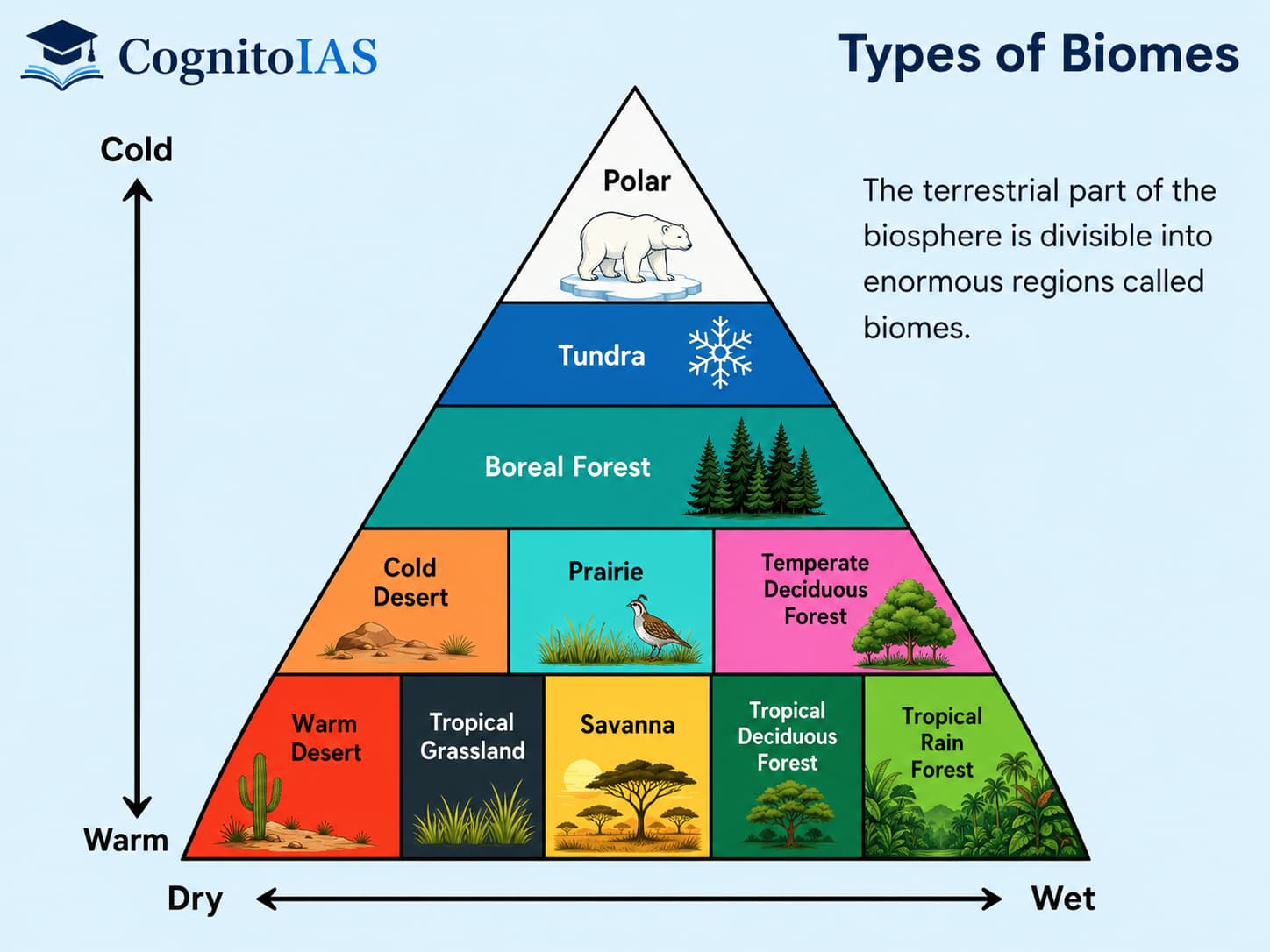
DIVISION I: THE TUNDRA BIOME
The coldest and harshest environment on Earth, occurring near the poles or atop the highest mountains.
Climate: Extremely long, freezing winters and very short, cool summers. Very low precipitation (cold desert).
Key Feature: The ground contains Permafrost (permanently frozen soil), which prevents deep tree roots from growing.
Vegetation: Treeless. Dominated by highly adapted pioneer species like mosses, lichens, and dwarf shrubs.
DIVISION II: THE DESERT BIOMES
Deserts are defined not by heat, but by extremely low moisture (usually less than 25 cm of rainfall annually). They are divided into two types based on temperature:
Tropical (Hot) Deserts:
Location: Near 30° N/S latitudes (e.g., Sahara, Thar, Arabian).
Features: Scorching daytime temperatures, no freezing winters. Dominated by highly drought-resistant plants (Xerophytes) like cactus and thorny scrubs.
Temperate (Cold) Deserts:
Location: Deep inside continents or in mountain rain-shadows (e.g., Gobi Desert, Patagonia, Ladakh).
Features: Hot summers but brutally cold, freezing winters. Precipitation often falls as snow.
DIVISION III: THE GRASSLAND BIOMES
Regions where there is enough rain to support extensive grasses, but not enough rain (or too many frequent fires) to support a dense forest canopy.
Tropical Grasslands (The Savanna):
Location: Near the equator (e.g., African Savanna, Brazilian Campos).
Features: Hot year-round with a distinct wet season and a long, severe dry season.
Vegetation: Tall, coarse grasses mixed with widely scattered, fire-resistant trees (like Acacia).
Temperate Grasslands (The Steppes & Prairies):
Location: Mid-latitudes, deep inland (e.g., North American Prairies, Eurasian Steppes).
Features: Warm summers and freezing winters.
UPSC Fact: They possess the richest, most fertile topsoil on Earth (Mollisols/Chernozems), making them the world's primary agricultural "breadbaskets."
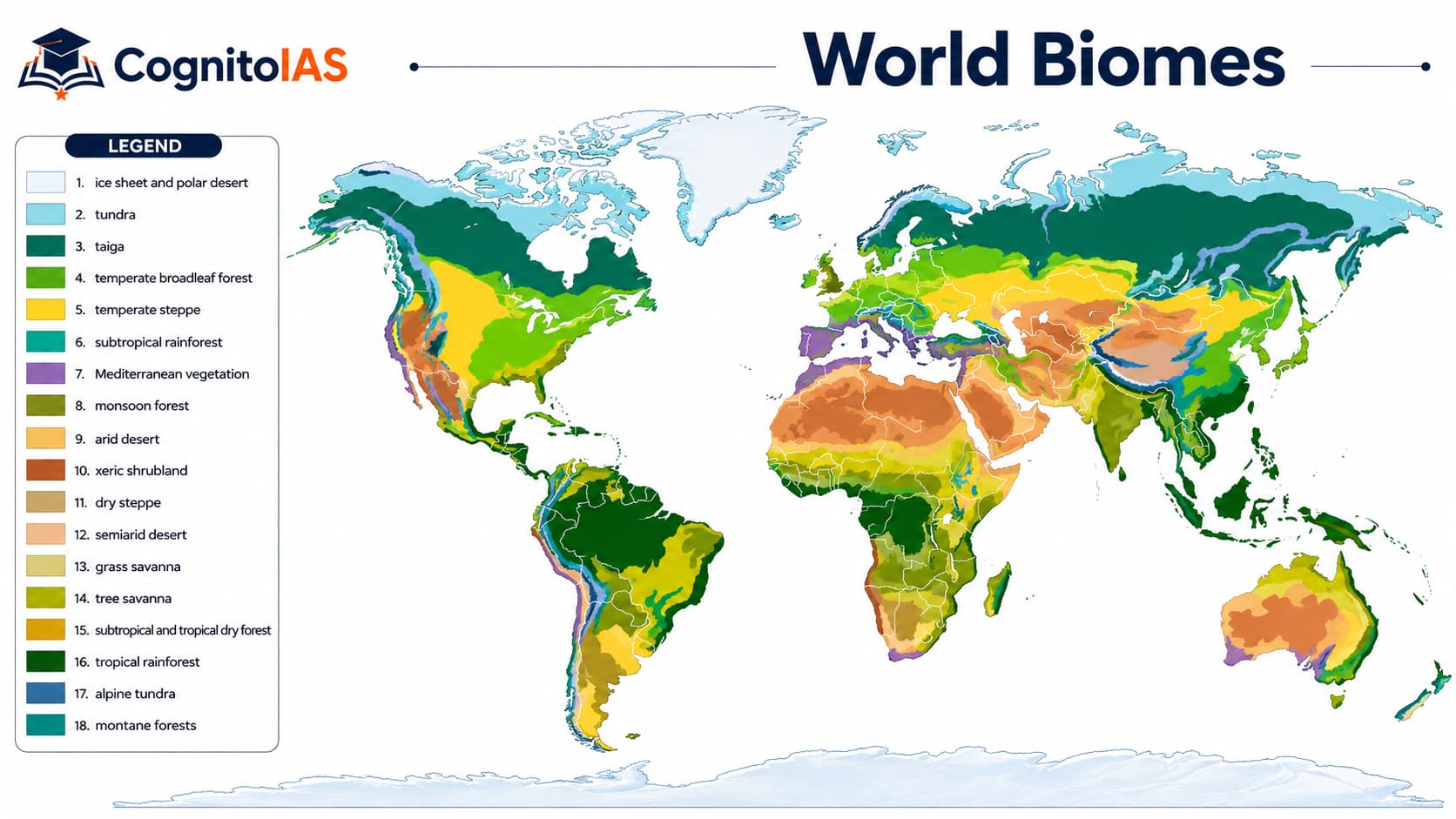
DIVISION IV: THE FOREST BIOMES
Regions dominated by trees and a continuous or semi-continuous canopy, classified by their latitude (temperature) and rainfall patterns.
A. Taiga / Boreal Forest (The Coldest Forest)
Location: Sub-arctic regions just south of the Tundra (Canada, Russia, Scandinavia).
Vegetation: Dominated entirely by Coniferous (Evergreen) trees like Pine, Spruce, and Fir. Their needle-like leaves conserve water, and their conical shape sheds heavy snow.
B. Temperate Forests (Mid-Latitudes with 4 Distinct Seasons)
Temperate Deciduous Forest:
Features: Moderate, year-round rainfall with freezing winters.
Vegetation: Trees (like Oak, Maple, Beech) completely shed their broad leaves in Autumn to survive the freezing winter, creating highly fertile leaf-litter soil.
Temperate Evergreen (Rainforest):
Features: Mild temperatures but extremely high rainfall and fog (e.g., Pacific Northwest USA, Tasmania).
Vegetation: Giant coniferous evergreens (like Redwoods) covered in moss and ferns.
C. Sub-Tropical Forests (Transition Zones)
Sub-Tropical Broadleaf Evergreen:
Features: Hot, humid summers and mild, relatively dry winters (e.g., Eastern China type climate).
Vegetation: Broad-leaved evergreens (like Laurel and Magnolia) and dense Bamboo thickets.
Sub-Tropical Deciduous (Mediterranean/Woodland):
Features: Hot, completely dry summers and wet winters.
Vegetation: Trees adapt to summer drought rather than winter cold. They feature thick, waxy leaves (Sclerophyllous vegetation like Olive and Cork Oak) to prevent water loss.
D. Tropical Forests (Near the Equator)
Tropical Evergreen / Rainforest:
Climate: Hot and wet year-round. Rains almost daily.
Vegetation: The most biodiverse biome on Earth. Features a dense, multi-layered canopy. Trees never shed their leaves all at once.
Soil Note: Despite lush growth, the soil is highly acidic and nutrient-poor due to heavy leaching.
Tropical Deciduous (Monsoon Forest):
Climate: Hot year-round with a distinct, heavy wet monsoon season followed by a prolonged dry season (e.g., Indian Subcontinent).
Vegetation: Trees (like Teak, Sal, and Sandalwood) shed their leaves during the dry summer to conserve water before the monsoon arrives.
Tropical Wet & Dry (Open Woodland / Thorn Forest):
Note on Classification: When rainfall drops significantly, the tropical deciduous forest transitions into Open Woodlands or Thorn Forests. This is the ecological boundary (Ecotone) that eventually blends into the Tropical Savanna (Grassland).
प्राकृतिक पारिस्थितिक तंत्र और बायोम वर्गीकरण (Natural Ecosystems and Biomes Classification)
1. प्राकृतिक पारिस्थितिक तंत्र क्या है? (What is a Natural Ecosystem?)
एक प्राकृतिक पारिस्थितिकी तंत्र एक ऐसा जैविक वातावरण है जो प्राकृतिक रूप से होता है और एक स्व-टिकाऊ (self-sustaining), स्वतंत्र इकाईके रूप में कार्य करता है। इसमें सभी सजीव जीव (पौधे, जानवर, सूक्ष्मजीव) बिना किसी बड़े मानवीय हस्तक्षेप (human intervention) या इंजीनियरिंग के अपने भौतिक निर्जीव पर्यावरण (जलवायु, मिट्टी, पानी, सूरज की रोशनी) के साथ अंतःक्रिया (interact) करते हैं।
2. प्राकृतिक पारिस्थितिक तंत्र का व्यापक वर्गीकरण
जिस भौतिक माध्यम में वे मौजूद हैं, उसके आधार पर प्राकृतिक पारिस्थितिक तंत्र को कड़ाई से दो प्राथमिक श्रेणियों में बांटा गया है:
जलीय पारिस्थितिक तंत्र (Aquatic Ecosystems): पानी पर आधारित प्रणालियाँ (उदा: महासागर, प्रवाल भित्तियाँ/Coral Reefs, झीलें, नदियाँ, आर्द्रभूमि/Wetlands)।
स्थलीय पारिस्थितिक तंत्र (Terrestrial Ecosystems): भूमि पर आधारित प्रणालियाँ (उदा: जंगल, रेगिस्तान, घास के मैदान)।
3. स्थलीय पारिस्थितिकी तंत्र बनाम बायोम (कांसेप्ट क्लेरिफायर)
स्थलीय दुनिया को विभाजित करने से पहले, पारिस्थितिकी तंत्र (Ecosystem) और बायोम (Biome) के बीच के अंतर को समझना महत्वपूर्ण है, क्योंकि अक्सर इन्हें गलत तरीके से एक ही समझ लिया जाता है।
स्थलीय पारिस्थितिकी तंत्र (Terrestrial Ecosystem): यह आपस में अंतःक्रिया करने वाले जीवों और उनके पर्यावरण के एक विशिष्ट, स्थानीय समुदाय (localized community) को संदर्भित करता है। यह किसी भी आकार का हो सकता है—विशाल जंगल जितना बड़ा या सड़े हुए पेड़ के एक छोटे तने जितना छोटा। इसका मुख्य फोकस अंतःक्रियाओं (खाद्य जाल, ऊर्जा प्रवाह) पर होता है।
स्थलीय बायोम (Terrestrial Biome): यह एक विशाल, वैश्विक स्तर का क्षेत्र है जो अपनी विशिष्ट मैक्रो-जलवायु (औसत वार्षिक तापमान और वर्षा) और वहां उगने वाली प्रमुख चरम वनस्पति (climax vegetation) द्वारा परिभाषित होता है।
नियम: एक एकल बायोम (जैसे मरुस्थल बायोम) एक 'विशाल छाते' (giant umbrella) की तरह कार्य करता है जिसके अंदर सैकड़ों छोटे, अलग-अलग स्थलीय पारिस्थितिक तंत्र (जैसे एक ओएसिस पारिस्थितिकी तंत्र, रेत के टीले का पारिस्थितिकी तंत्र, पथरीली घाटी का पारिस्थितिकी तंत्र) होते हैं।
4. स्थलीय बायोम का महा-वर्गीकरण (The Grand Classification of Terrestrial Biomes)
तापमान, वर्षा और प्रमुख वनस्पति के आधार पर, स्थलीय दुनिया को चार प्रमुख प्रभागों (Divisions) में वर्गीकृत किया गया है।
प्रभाग I: टुंड्रा बायोम (THE TUNDRA BIOME)
पृथ्वी पर सबसे ठंडा और कठोर वातावरण, जो ध्रुवों के पास या सबसे ऊंचे पहाड़ों की चोटी पर पाया जाता है।
जलवायु: बेहद लंबी, जमा देने वाली सर्दियां और बहुत छोटी, ठंडी गर्मियां। वर्षा बहुत कम होती है (ठंडा रेगिस्तान)।
मुख्य विशेषता: यहाँ की जमीन में पर्माफ्रॉस्ट (Permafrost - स्थायी रूप से जमी हुई मिट्टी) पाई जाती है, जो पेड़ों की गहरी जड़ों को बढ़ने से रोकती है।
वनस्पति: वृक्षहीन (Treeless)। यह मॉस (mosses), लाइकेन (lichens) और बौनी झाड़ियों (dwarf shrubs) जैसी अत्यधिक अनुकूलित पायनियर प्रजातियों से भरा होता है।
प्रभाग II: मरुस्थल बायोम (THE DESERT BIOMES)
रेगिस्तानों को गर्मी से नहीं, बल्कि अत्यधिक कम नमी (आमतौर पर प्रति वर्ष 25 सेमी से कम वर्षा) से परिभाषित किया जाता है। तापमान के आधार पर इन्हें दो प्रकारों में बांटा जाता है:
उष्णकटिबंधीय (गर्म) रेगिस्तान (Tropical / Hot Deserts):
स्थान: 30° उत्तर/दक्षिण अक्षांशों के पास (उदा: सहारा, थार, अरेबियन)।
विशेषताएं: चिलचिलाती दिन की गर्मी, सर्दियां जमा देने वाली नहीं होतीं। कैक्टस और कांटेदार झाड़ियों जैसे अत्यधिक सूखा-प्रतिरोधी पौधों (मरुद्भिद / Xerophytes) का दबदबा।
समशीतोष्ण (ठंडे) रेगिस्तान (Temperate / Cold Deserts):
स्थान: महाद्वीपों के बहुत अंदर या पहाड़ों की 'वृष्टि छाया' (rain-shadow) में (उदा: गोबी रेगिस्तान, पेटागोनिया, लद्दाख)।
विशेषताएं: गर्म गर्मियां लेकिन अत्यधिक ठंडी, जमा देने वाली सर्दियां। वर्षा अक्सर बर्फ के रूप में होती है।
प्रभाग III: घास के मैदान बायोम (THE GRASSLAND BIOMES)
वे क्षेत्र जहाँ घास के व्यापक फैलाव के लिए पर्याप्त बारिश होती है, लेकिन घने जंगल की छतरी (canopy) का समर्थन करने के लिए पर्याप्त बारिश नहीं होती (या बार-बार आग लगती है)।
उष्णकटिबंधीय घास के मैदान - सवाना (Tropical Grasslands / The Savanna):
स्थान: भूमध्य रेखा के पास (उदा: अफ्रीकी सवाना, ब्राजील के कैम्पोस)।
विशेषताएं: साल भर गर्मी, साथ ही एक स्पष्ट गीला मौसम और एक लंबा, कठोर सूखा मौसम।
वनस्पति: लंबी, खुरदरी घासों के साथ दूर-दूर बिखरे हुए, आग-प्रतिरोधी पेड़ (जैसे बबूल / Acacia)।
समशीतोष्ण घास के मैदान - स्टेपीज़ और प्रेयरीज़ (Temperate Grasslands):
स्थान: मध्य अक्षांश (Mid-latitudes), महाद्वीपों के अंदर (उदा: उत्तरी अमेरिकी प्रेयरीज़, यूरेशियन स्टेपीज़)।
विशेषताएं: गर्म गर्मियां और जमा देने वाली सर्दियां।
UPSC फैक्ट: इनके पास पृथ्वी की सबसे समृद्ध, सबसे उपजाऊ ऊपरी मिट्टी (Mollisols/Chernozems) होती है, जो इन्हें दुनिया की प्राथमिक कृषि "ब्रेडबास्केट" (अनाज का भंडार) बनाती है।
प्रभाग IV: वन बायोम (THE FOREST BIOMES)
पेड़ों और निरंतर या अर्ध-निरंतर छतरी (canopy) वाले क्षेत्र, जिन्हें उनके अक्षांश (तापमान) और वर्षा के पैटर्न के आधार पर वर्गीकृत किया गया है।
A. टैगा / बोरियल वन (सबसे ठंडा जंगल):
स्थान: टुंड्रा के ठीक दक्षिण में उप-आर्कटिक क्षेत्र (कनाडा, रूस, स्कैंडिनेविया)।
वनस्पति: पूरी तरह से शंकुधारी (सदाबहार) पेड़ों (Pine, Spruce, Fir) का दबदबा। इनकी सुई जैसी पत्तियां पानी बचाती हैं, और शंक्वाकार आकार भारी बर्फ को खिसकने देता है।
B. समशीतोष्ण वन (Temperate Forests - 4 स्पष्ट मौसमों वाले मध्य-अक्षांश):
समशीतोष्ण पर्णपाती वन (Temperate Deciduous Forest):
विशेषताएं: जमा देने वाली सर्दियों के साथ साल भर मध्यम वर्षा।
वनस्पति: पेड़ (जैसे ओक, मेपल) जमा देने वाली सर्दियों से बचने के लिए शरद ऋतु (Autumn) में अपने चौड़े पत्ते पूरी तरह से गिरा देते हैं, जिससे अत्यधिक उपजाऊ पत्तों वाली मिट्टी बनती है।
समशीतोष्ण सदाबहार / वर्षावन (Temperate Evergreen / Rainforest):
विशेषताएं: हल्का तापमान लेकिन अत्यधिक भारी बारिश और कोहरा (उदा: अमेरिका का प्रशांत उत्तर-पश्चिम, तस्मानिया)।
वनस्पति: काई (moss) और फर्न (ferns) से ढके विशाल शंकुधारी सदाबहार पेड़ (जैसे रेडवुड्स)।
C. उप-उष्णकटिबंधीय वन (संक्रमण क्षेत्र / Transition Zones):
उप-उष्णकटिबंधीय चौड़ी पत्ती वाले सदाबहार (Broadleaf Evergreen):
विशेषताएं: गर्म, नम गर्मियां और हल्की, अपेक्षाकृत शुष्क सर्दियां (उदा: पूर्वी चीन प्रकार की जलवायु)।
वनस्पति: चौड़ी पत्ती वाले सदाबहार (जैसे लॉरेल और मैगनोलिया) और बांस के घने जंगल।
उप-उष्णकटिबंधीय पर्णपाती (भूमध्यसागरीय / वुडलैंड):
विशेषताएं: गर्म, पूरी तरह से सूखी गर्मियां और गीली सर्दियां।
वनस्पति: पेड़ सर्दियों की ठंड के बजाय गर्मियों के सूखे के अनुकूल होते हैं। पानी के नुकसान को रोकने के लिए इनमें मोटी, मोमी पत्तियां (स्क्लेरोफिलस / Sclerophyllous वनस्पति जैसे जैतून और कॉर्क ओक) होती हैं।
D. उष्णकटिबंधीय वन (भूमध्य रेखा के पास):
उष्णकटिबंधीय सदाबहार / वर्षावन (Tropical Evergreen / Rainforest):
जलवायु: साल भर गर्म और नम। लगभग रोजाना बारिश होती है।
वनस्पति: पृथ्वी पर सबसे अधिक जैव विविधता वाला बायोम। एक घनी, बहु-स्तरीय कैनोपी (छतरी) होती है। पेड़ कभी भी एक साथ अपने पत्ते नहीं गिराते।
मिट्टी पर नोट: हरे-भरे विकास के बावजूद, भारी लीचिंग (निक्षालन/पोषक तत्वों का बह जाना) के कारण मिट्टी अत्यधिक अम्लीय और पोषक तत्वों से विहीन होती है।
उष्णकटिबंधीय पर्णपाती / मानसूनी वन (Tropical Deciduous / Monsoon Forest):
जलवायु: साल भर गर्म, भारी बारिश वाला मानसूनी मौसम और उसके बाद एक लंबा सूखा मौसम (उदा: भारतीय उपमहाद्वीप)।
वनस्पति: मानसून आने से पहले, सूखे की गर्मियों के दौरान पानी बचाने के लिए पेड़ (जैसे सागौन/Teak, साल और चंदन) अपने पत्ते गिरा देते हैं।
उष्णकटिबंधीय आर्द्र और शुष्क (खुला वुडलैंड / कांटेदार जंगल):
वर्गीकरण पर नोट: जब वर्षा काफी कम हो जाती है, तो उष्णकटिबंधीय पर्णपाती जंगल 'ओपन वुडलैंड्स' (Open Woodlands) या कांटेदार जंगलों (Thorn Forests) में बदल जाते हैं। यह वह पारिस्थितिक सीमा (Ecotone) है जो अंततः उष्णकटिबंधीय सवाना (घास के मैदान) में विलीन हो जाती है।